Top 10 Fastest Countries for Internet speed in 2025
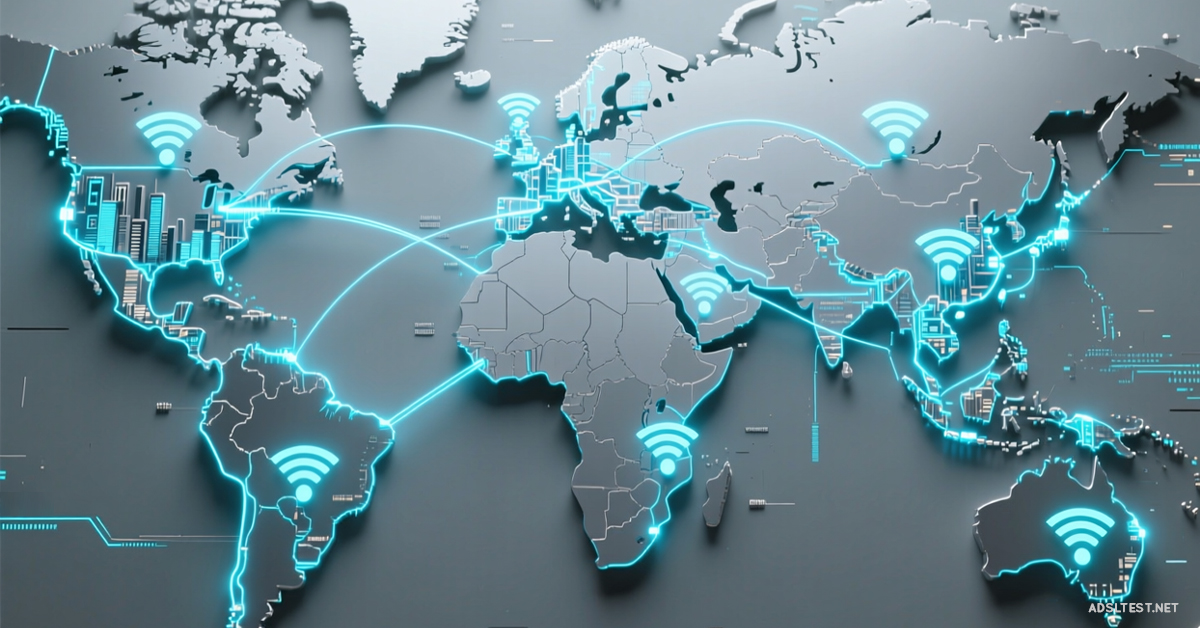
We’ve analyzed the latest data from Ookla’s Speedtest Intelligence, Akamai’s State of the Internet, and national regulatory reports to bring you the definitive ranking of the top 10 fastest countries for internet in 2025.
How We Measured: It’s More Than Just a Number
Before we dive into the list, let’s clarify what “fastest” means. We’re looking at a combined score emphasizing:
Median Download Speed (Mbps): The most accurate measure of what the typical user experiences, not just peak potential.
Consistency & Latency: A fast connection is useless if it’s unreliable. We considered the percentage of tests that met minimum thresholds for 4K streaming and low-latency gaming.
Broadband & Mobile Leapfrogging: Some countries are prioritizing 5G mobile speeds that rival home broadband, changing the entire landscape.
Now, let’s count them down.
The 2025 Ranking: Top 10 Fastest Internet Countries
10. Japan 🇯🇵
Average Download Speed: 215 Mbps
Key Driver: Widespread 10G-PON Fiber rollout in major cities like Tokyo and Osaka.
What Makes It Special: Japan combines incredible fiber infrastructure with some of the world’s most advanced and affordable 5G networks. While dense urban centers boast staggering speeds, efforts to connect rural areas are helping maintain a strong national average. It’s a model of integrated fixed and mobile excellence.
9. New Zealand 🇳🇿
Average Download Speed: 228 Mbps
Key Driver: The government-backed Ultra-Fast Broadband (UFB) fiber project, now in its final stages.
What Makes It Special: A stellar example of a nationwide public-private partnership paying off. New Zealand has successfully connected over 87% of its population to fiber-to-the-premises (FTTP), making high speeds accessible even in smaller towns. This has been a game-changer for its remote work and tech sectors.
8. United Arab Emirates 🇦🇪
Average Download Speed: 240 Mbps
Key Driver: Strategic investment in nationwide fiber (FTTH) and aggressive 5G-Advanced deployments.
What Makes It Special: The UAE treats top-tier internet as critical national infrastructure. Cities like Dubai and Abu Dhabi aren’t just fast; they’re seamlessly connected, with public Wi-Fi and mobile networks that complement home broadband. It’s a hub for tech innovation in the Middle East.
7. Switzerland 🇨🇭
Average Download Speed: 255 Mbps
Key Driver: Competitive market between Swisscom, Sunrise, and local providers pushing fiber expansion.
What Makes It Special: Switzerland proves that mountainous terrain isn’t a barrier to speed. Through a mix of fiber, advanced cable, and fixed wireless access, they deliver remarkable consistency and low latency, perfect for finance and precision-based industries.
6. South Korea 🇰🇷
Average Download Speed: 270 Mbps
Key Driver: Early and relentless investment in national fiber optics and cutting-edge 5G-Advanced.
What Makes It Special: A perennial leader, South Korea focuses on future-proofing. Trials for 6G are already underway, and there’s a cultural emphasis on eliminating “slow zones.” The result? Unmatched mobile gaming experiences and a society built on real-time connectivity.
5. Hong Kong (SAR) 🇭🇰
Average Download Speed: 285 Mbps
Key Driver: Ultra-dense fiber networks in a compact, high-rise urban environment.
What Makes It Special: Geography is an advantage here. Delivering fiber in a dense city is more efficient, leading to incredibly competitive pricing and some of the world’s highest speed tiers for consumers at shockingly low costs. It’s a proof-of-concept for urban hyper-connectivity.
4. Singapore 🇸🇬
Average Download Speed: 300 Mbps
Key Driver: The Next Gen Nationwide Broadband Network (NGNBN), a government-led open-access fiber network.
What Makes It Special: Singapore’s model ensures every home and business is wired with fiber, with service providers competing on price and service over the same infrastructure. This creates a fair, fast, and innovative market. Their 10 Gbps residential plans are becoming mainstream.
3. Monaco 🇲🇨
Average Download Speed: 320 Mbps
Key Driver: Exclusive, blanket FTTH coverage across the entire microstate.
What Makes It Special: As the world’s most densely populated country, Monaco shows what’s possible with zero rural challenge. The entire principality is a fiber-optic hotspot, offering symmetrical (equal upload/download) speeds as standard, a dream for content creators and remote professionals.
2. Chile 🇨🇱
Average Download Speed: 335 Mbps
Key Driver: Aggressive subsea cable landings and major investments in domestic fiber backbone.
What Makes It Special: Chile is the dark horse of 2025. By strategically positioning itself as a digital gateway between the Americas and Asia-Pacific via new submarine cables, it has leapfrogged regional neighbors. This infrastructure, combined with national fiber projects, has created a surprising and powerful South American tech hub.
1. Denmark 🇩🇰
Average Download Speed: 350 Mbps
Key Driver: A cooperative model where utility companies and municipalities own and operate the dark fiber, leasing it to ISPs.
What Makes It Special: Denmark’s secret isn’t just technology—it’s governance. This “open access” model fosters intense ISP competition on service and price, driving adoption of the latest tech like XGS-PON fiber. The outcome? Remarkably uniform high-speed access across both cities and the countryside, making it the most consistently fast nation on earth in 2025.
Key Trends We’re Seeing in 2025
The Rise of Symmetrical Speeds: Upload speed is no longer an afterthought. Countries leading in fiber (like Monaco and Denmark) offer equal upload, crucial for cloud work, video conferencing, and streaming.
5G as a True Broadband Replacement: In top countries, 5G plans with 200+ Mbps speeds are changing how people connect, especially in regions where laying fiber is difficult.
Government Policy is Everything: The top performers (Denmark, Singapore, New Zealand) show that proactive national broadband strategies are more impactful than leaving it purely to private telecoms.
What This Means for You
If you’re considering a move or just curious about the future:
For Digital Nomads: Denmark, New Zealand, and the UAE offer a powerful blend of fast infrastructure, English-friendliness, and supportive visa programs.
For Gamers and Streamers: South Korea, Hong Kong, and Switzerland provide the low latency and rock-solid consistency you need.
For the Tech-Curious: Watching Chile and Japan shows how investment and geography can create unexpected digital leaders.
The gap between the top 10 and the global average is significant, but it’s closing. The technologies and policies pioneered by these leaders are the blueprints for the rest of the world.
The bottom line? Speed is becoming a global utility, and in 2025, these ten countries are the power plants. They prove that with the right mix of investment, competition, and vision, a faster, more connected future is possible for everyone.
*Sources: Data synthesized from Q4 2024 – Q1 2025 reports from Ookla’s Speedtest Global Index, Akamai, ITU, and national regulatory authorities. Speeds represent median fixed broadband download speeds.*