The 2025 Ranking: Fastest to Slowest
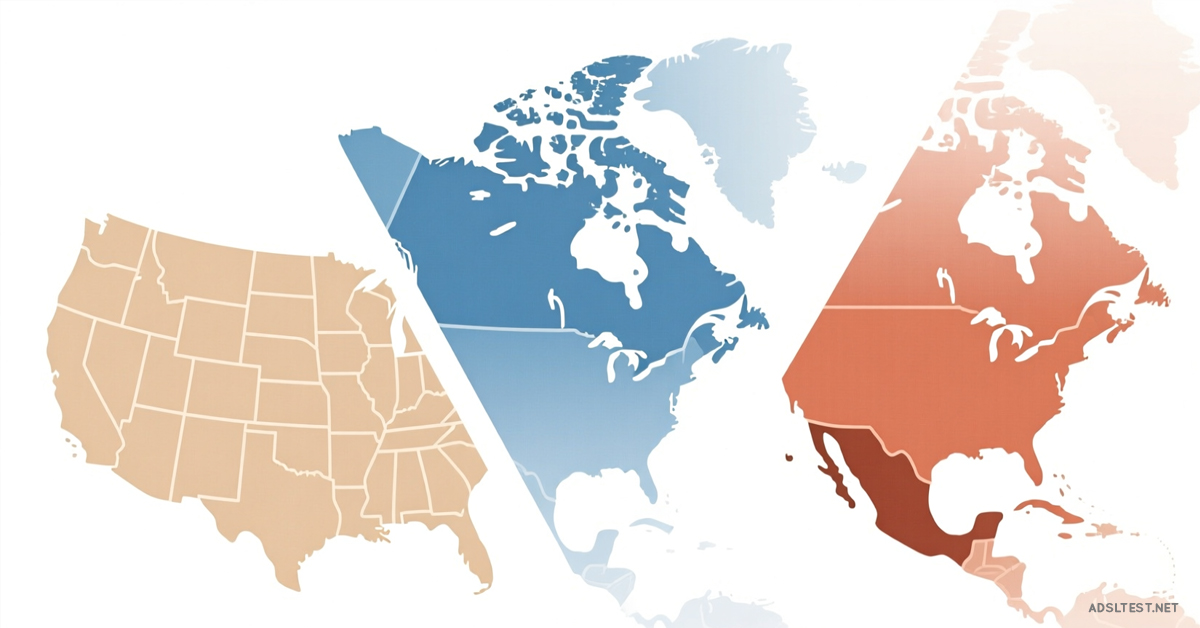
1. 🇺🇸 United States
Median Speed: 185 Mbps | Trend: ↗️ Steady Growth
The U.S. reclaims the top spot, driven by two powerful forces. First, BEAD Program funding is now actively rolling out, bringing fiber to long-neglected rural areas in states like Mississippi and West Virginia. Second, the explosion of 5G Fixed Wireless Access (FWA) from T-Mobile and Verizon is providing real competition to cable monopolies, pushing speeds up and prices down in suburban markets. Urban hubs like New York City and Los Angeles now commonly see symmetrical 2 Gig plans, while FWA delivers a reliable 200+ Mbps to areas where fiber trucks haven’t yet arrived.
2. 🇨🇦 Canada
Median Speed: 175 Mbps | Trend: ➡️ Holding Steady
Canada maintains its strong, consistent performance, but faces a last-mile challenge. Major cities like Toronto, Vancouver, and Montreal have excellent fiber and cable infrastructure, but prices remain high due to limited competition outside the major providers (Rogers, Bell). The real story is the success of regional fiber providers like Telus in the West and Eastlink in the Maritimes, which are driving up averages. Rural and northern communities, however, still rely heavily on slower satellite and fixed wireless, preventing a higher national rank.
3. 🇲🇽 Mexico
Median Speed: 95 Mbps | Trend: ↗️ Rapid Growth
Mexico is the dark horse success story of 2025. A decade of aggressive investment by Telmex (with its Totalplay fiber brand) and newer players like Izzi has transformed cities. Urban centers like Mexico City, Monterrey, and Guadalajara now boast widespread, affordable fiber plans rivaling the U.S. The median speed is dragged down by significant rural and southern state disparities, but the growth rate is the highest in North America, signaling a major shift.
Key Trends Defining North America in 2025
The Fiber Frontier is Moving Inland
For years, fiber was a coastal luxury. Now, Omaha, Kansas City, and Salt Lake City are posting faster median speeds than Seattle or Boston, thanks to proactive municipal networks and providers like Google Fiber and AT&T expanding their heartland footprint.
5G Home Internet is Reshaping Suburbia
T-Mobile’s and Verizon’s 5G Home Internet isn’t just a backup anymore. For millions in suburban neighborhoods, it’s the primary broadband connection, offering 200-300 Mbps for $50/month. This is creating a new “speed floor” and finally breaking the local cable monopoly in countless towns.
The Persistent Digital Divide
Despite progress, the gap remains stark. Tribal lands and Appalachian regions still report median speeds below 50 Mbps. While BEAD funds are flowing, deployment takes time, leaving these communities in a frustrating limbo as the national average climbs.
City vs. City: The Real-World Speed Champions
Fastest Major City: Minneapolis, USA – Widespread municipal-friendly policies and competition between USI Fiber and Xfinity have created a powerhouse, with a median speed of 245 Mbps.
Most Improved: Querétaro, Mexico – A booming tech hub, now with near-total fiber coverage and a median speed jumping 40% in one year to 160 Mbps.
Biggest Disappointment: Vancouver, Canada – Despite its tech reputation, high costs and infrastructure bottlenecks have stalled growth, with a median speed plateauing at 165 Mbps.
What This Means for You
If you’re in the U.S.: Shop again, even if you just did. The 5G FWA competition means your cable provider likely has a new promotional rate or speed upgrade they haven’t advertised. Don’t ask—call and threaten to switch.
If you’re in Canada: Look beyond the “Big Three.” Investigate regional carriers and resellers (like TekSavvy, Oxio) that often offer better prices on the same lines, especially in urban areas.
If you’re in Mexico: Location is everything. Fiber maps are crucial. If your colonia has Izzi or Totalplay fiber, you’re in a high-speed, low-cost paradise. If not, you’re likely still struggling.
The 2025 takeaway? North America is no longer a broadband monolith. The U.S. is surging via subsidy and competition, Canada is holding steady but pricey, and Mexico is rising fast against the odds. One thing unites them: the era of accepting a sluggish, expensive connection is finally, definitively over. Your upgrade is waiting.