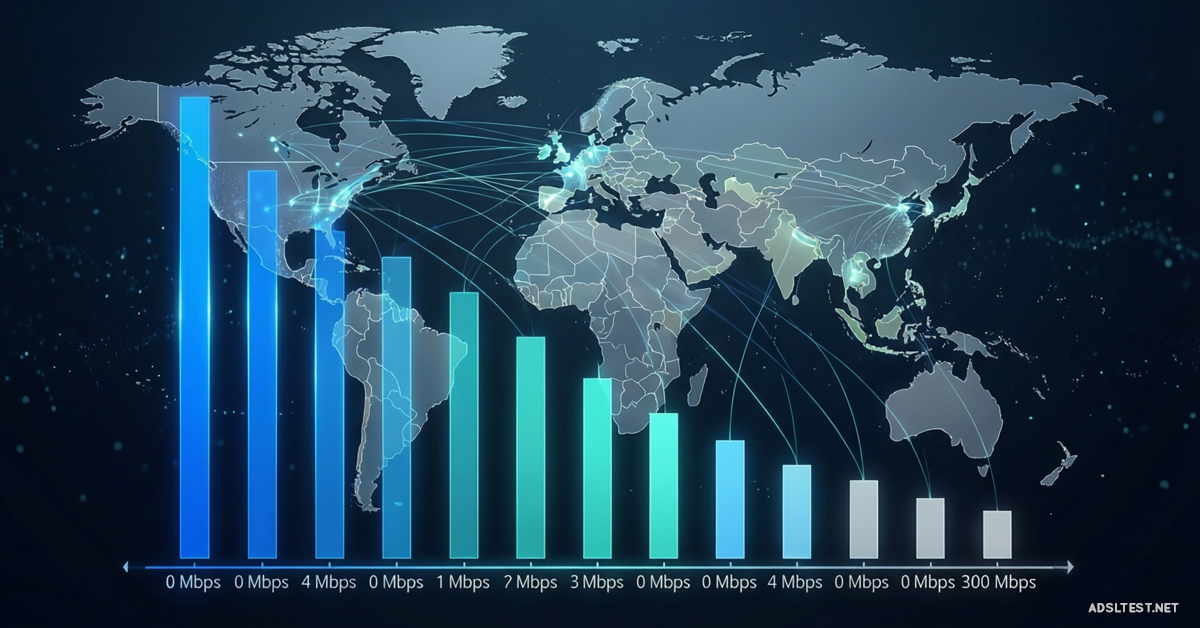
The following ranking is based on comprehensive data from global performance measurement firms, analyzing millions of consumer-initiated tests for median download speeds over fixed broadband networks. The competition is fiercer than ever, with new technologies pushing the boundaries of what’s possible.
1.  Singapore
Reclaiming its throne, Singapore stands as the world’s digital sovereign in 2026. With a national focus on pervasive fiber-to-the-home (FTTH) coverage and early, strategic deployment of 10-Gigabit symmetric services, the city-state offers unparalleled consistency and blistering speeds that empower both its finance hub and smart city initiatives, setting the global gold standard.
2.  Switzerland
A perennial powerhouse, Switzerland combines precision engineering with robust competition among providers. Extensive investment in fiber expansion across its challenging alpine terrain and a strong regulatory framework have ensured that high-speed access is not just for urban centers like Zürich and Geneva, but a standard expectation nationwide.
3.  Denmark
Denmark’s holistic digital society strategy continues to pay massive dividends. Aggressive public-private partnerships have made ultra-fast internet a utility as common as electricity. The country’s focus on digital inclusion and cutting-edge R&D in connectivity ensures its population and businesses are operating at the forefront of the digital frontier.
4.  Chile
Chile
The standout performer and regional champion of the Americas, Chile’s ascent is a story of ambitious submarine cable projects and liberalized market policies. Investments linking the port city of Valparaíso to international data highways have transformed it into a digital gateway, bringing world-class bandwidth to the nation and the continent.
5.  Thailand
A remarkable success story in Southeast Asia, Thailand’s massive nationwide fiber rollout program has catapulted it into the global top five. Competitive pressure in major markets like Bangkok and state-driven projects for rural areas have created a dramatic, rapid improvement in accessible speeds for millions.
6.  Hong Kong (SAR)
Density and efficiency define Hong Kong’s connectivity. The high-rise architecture of districts like Kowloon facilitates incredibly dense fiber networks, while intense competition among a multitude of ISPs in a compact market drives innovation and keeps prices low for some of the planet’s fastest consumer packages.
7.  France
France’s sustained investment under its “Très Haut Débit” (Very High-Speed) plan has reaped rewards, with fiber now reaching a vast majority of homes. A historically strong regulatory body fostering competition has been key, making premium internet accessible and affordable across the country, from Paris to the countryside.
8.  Japan
Japan
A consistent leader in technology, Japan’s strength lies in its reliability and deep fiber penetration. While rollout in dense metropolises like Tokyo was achieved years ago, ongoing upgrades to existing infrastructure and a culture that demands perfection in service quality keep it securely in the top tier globally.
9.  United States
The U.S. landscape is one of contrasts, but its high-performing peaks are among the world’s highest. Major urban centers and regions with municipal fiber or competitive cable gigabit networks drive the national average upward, though the ranking highlights the ongoing challenge of bridging the digital divide across such a vast geography.
10.  South Korea
The former perennial champion remains a connectivity giant, though relative saturation and the pace of competitors’ upgrades see it in the tenth position. The focus in tech-capitals like Seoul has shifted toward next-generation applications, 6G research, and seamless integration of connectivity into every aspect of daily life.
What’s Driving the Speed Revolution?
Several key factors separate the leaders from the pack. The transition from copper to full-fiber (FTTP) networks is the single biggest driver. Secondly, pro-competition regulation that allows multiple providers to use infrastructure prevents monopolies and spurs innovation. Finally, government vision and funding for nationwide broadband as a public utility, not a luxury, creates the foundation for these speeds to become a national reality.
The Bottom Line
The 2026 rankings show that geographic size is no longer a barrier to digital leadership. The nations at the top are those that have made swift, reliable internet a non-negotiable pillar of national policy. For businesses, this means new opportunities in emerging digital hubs. For users, it signifies a world where distance and latency shrink daily, reshaping how we work, learn, and connect. The race for speed is, ultimately, a race toward the future.