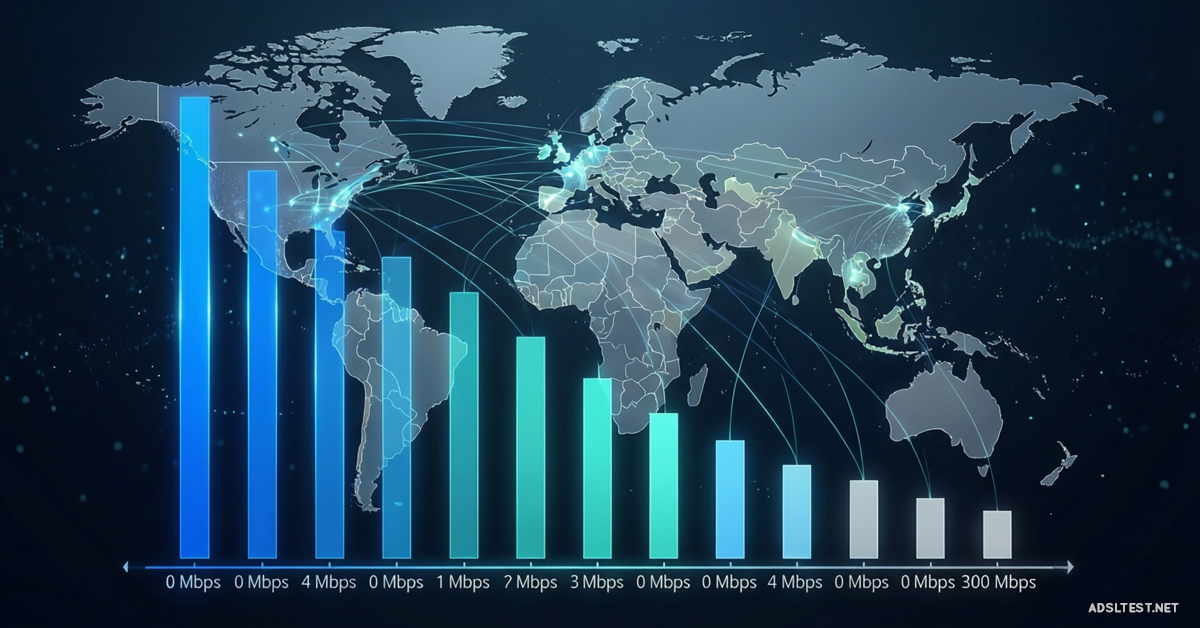
 Singapore isn’t just a city-state; it’s a global benchmark. Consistently topping charts, its nationwide fiber network delivers staggering median speeds above 300 Mbps. The government’s proactive infrastructure investments mean even dense urban areas experience seamless 4K streaming, gaming, and remote work.
 Geneva, Switzerland shines with its unique blend of private sector excellence and high demand from international organizations. The competition among providers here has driven symmetric fiber (equal upload/download speeds) deep into the Alps, making it a European leader for researchers and businesses needing flawless data transfer.
 Santiago, Chile might surprise some, but it’s a South American powerhouse. Major investments in fiber-to-the-home (FTTH) have transformed its digital landscape. Coupled with progressive regulation, Santiago offers some of the most affordable high-speed packages on the continent, bridging the digital divide at a remarkable pace.
 Copenhagen, Denmark exemplifies seamless integration. Internet is treated as a fundamental utility here. The city’s cooperative-style ISP models and ambitious municipal networks ensure nearly every street, old or new, has access to future-proof, low-latency connections perfect for smart city tech.
 Hong Kong leverages its ultra-dense urban geography to its advantage. The short physical distances and intense competition have resulted in some of the world’s most affordable multi-gigabit plans. It’s common for residents to choose from several 10 Gbps home packages—a truly staggering prospect.
 Bucharest, Romania remains Europe’s dark horse and a favorite among digital nomads. Built on a foundation of cutting-edge fiber optics from the early 2000s, its networks operate with incredible efficiency. The result? Consistently some of the highest speed-to-cost ratios globally, turning entire neighborhoods into productivity hubs.
 Seoul, South Korea is a perennial titan. The focus for 2026 has shifted beyond raw speed to ubiquitous integration. Here, hyper-fast 5G and 10Gbps fiber blend with public Wi-Fi in every park, subway, and street, creating a truly immersive and uninterrupted online ecosystem that others strive to emulate.
 Raleigh, North Carolina, USA represents a new wave of American cities breaking speed records. Fueled by the tech talent of the Research Triangle and fierce competition between fiber providers and cable giants, Raleigh has seen median speeds skyrocket, making it a magnet for remote tech workers.
What’s Driving These Speeds?
The common threads are fiber optics, competition, and smart policy. Cities that treat internet as critical infrastructure, encourage ISP rivalry, and streamline permits for fiber digs are pulling ahead. The gap isn’t just about technology—it’s about political will and market design.
Pro Tip for Travelers: Always check if your accommodation specifically mentions fiber internet. Descriptions like “high-speed Wi-Fi” are often meaningless. A quick search for the building address on local ISP websites can reveal the true available plans.
The Bottom Line
While raw speed is impressive, the winning cities of 2026 combine velocity with reliability, affordability, and widespread access. This isn’t just about downloading movies in seconds; it’s about enabling next-generation industries, remote education, and a quality of life where the digital world never holds you back. The global connectivity race is reshaping where businesses base themselves and how people choose to live.